Why Skill-Based learning is replacing Rote learning in India
A quick, guide for parents & students | NEP 2020 Explained
What Is Skill-Based learning, and why Is India adopting It?
Skill-based learning is an approach where students apply concepts through projects, discussion, and real-world tasks, rather than memorizing and reproducing facts. India's National Education Policy (NEP 2020) formally pushes schools toward this "competency-based" model, which assesses what a student can do with knowledge, not just how much of it they can recall. Three things are driving the shift. Employers increasingly value problem-solving over memorized facts. Information is now free and instant, so recall matters far less than the ability to use it. And global universities expect independent thinking and research experience from applicants, not just high scores.
What does Skill-Based learning actually look like in a classroom?
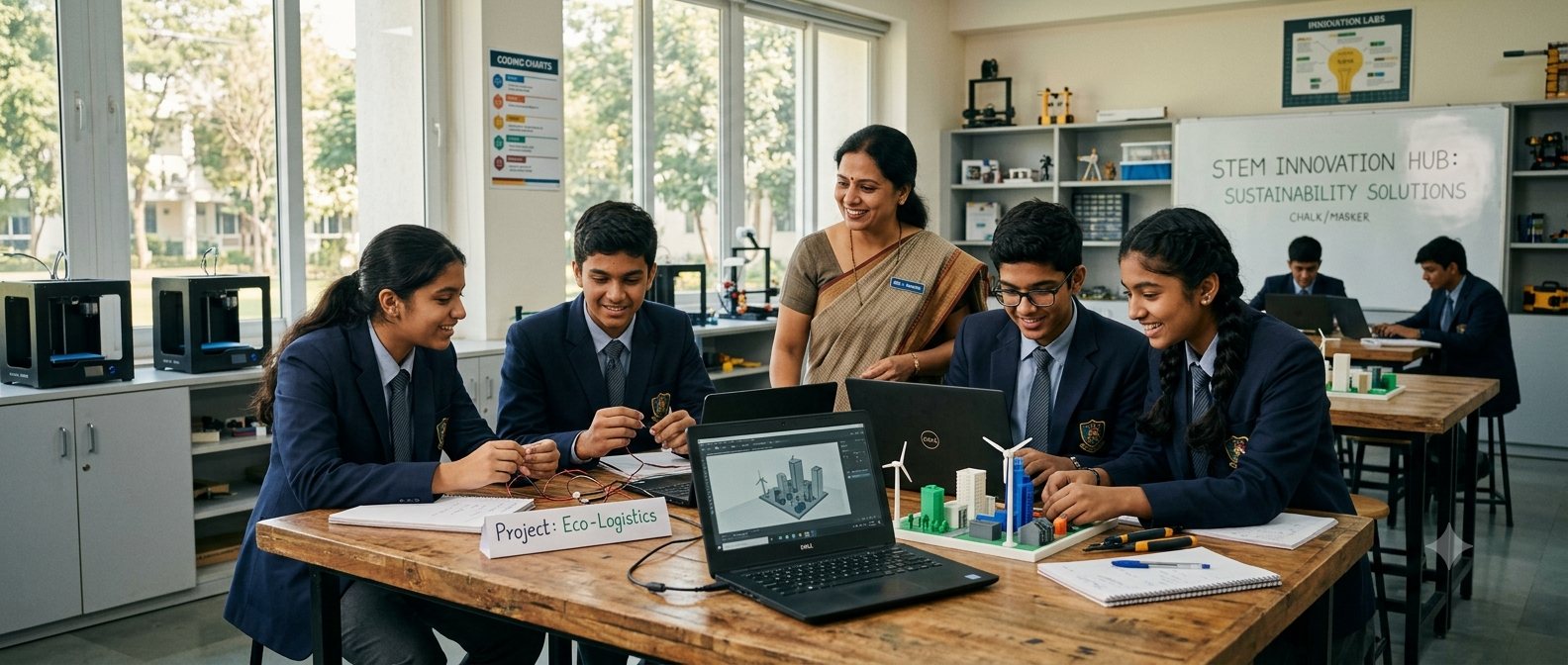
In practice, it's project-based assignments instead of copied notes, coding and design-thinking modules instead of textbook drills, structured debates instead of silent recitation, and real data analysis instead of formula memorization. A geography lesson might involve mapping local water usage instead of labelling a diagram from the textbook.
This isn't a fringe experiment. Boards are gradually rewriting assessment patterns to include project work, oral presentations, and open-book application questions alongside traditional written exams.
Where does this approach fall short today?
The idea is sound, but classroom reality lags behind policy. Many schools remain textbook-heavy simply because they lack the resources, time, or trained staff to run project-based learning well. Board exams, particularly CBSE and ICSE, still lean heavily on written recall, which creates a mismatch between what NEP 2020 encourages and what actually gets tested. Teacher training is uneven, and access to well-implemented programme still skews toward urban private schools.
None of this makes the shift wrong — it makes it incomplete, and worth watching closely at the school level.
How can parents tell if a school is genuinely Skill-Based?
Ask to see real classroom projects and recent assessment papers, not the prospectus. A school that's serious about this will happily show you a sample project brief, a rubric, or a student's actual submitted work. If the answer is vague, the practice probably is too.
Frequently Asked Questions
Does this mean marks stop mattering?
No. Marks still matter, especially for board results and admissions. Conceptual understanding built through skill-based methods tends to improve marks over time rather than replace them.
My child is already in Class 9 or 10 — is it too late to build these skills?
Not at all. Critical thinking and project habits can start at any stage. Even a single term of genuine project work builds a real foundation.
Is skill-based learning only relevant for STEM subjects?
No. It applies just as well to history research projects, language debates, or economics case studies as it does to science and coding.
.....................................................................................................................................................
The takeaway: Indian classrooms are shifting from "how much do you know" to "what can you do with it." That shift is real, but uneven — so check what your child's specific school is actually doing, not just what the policy says it should be doing.