
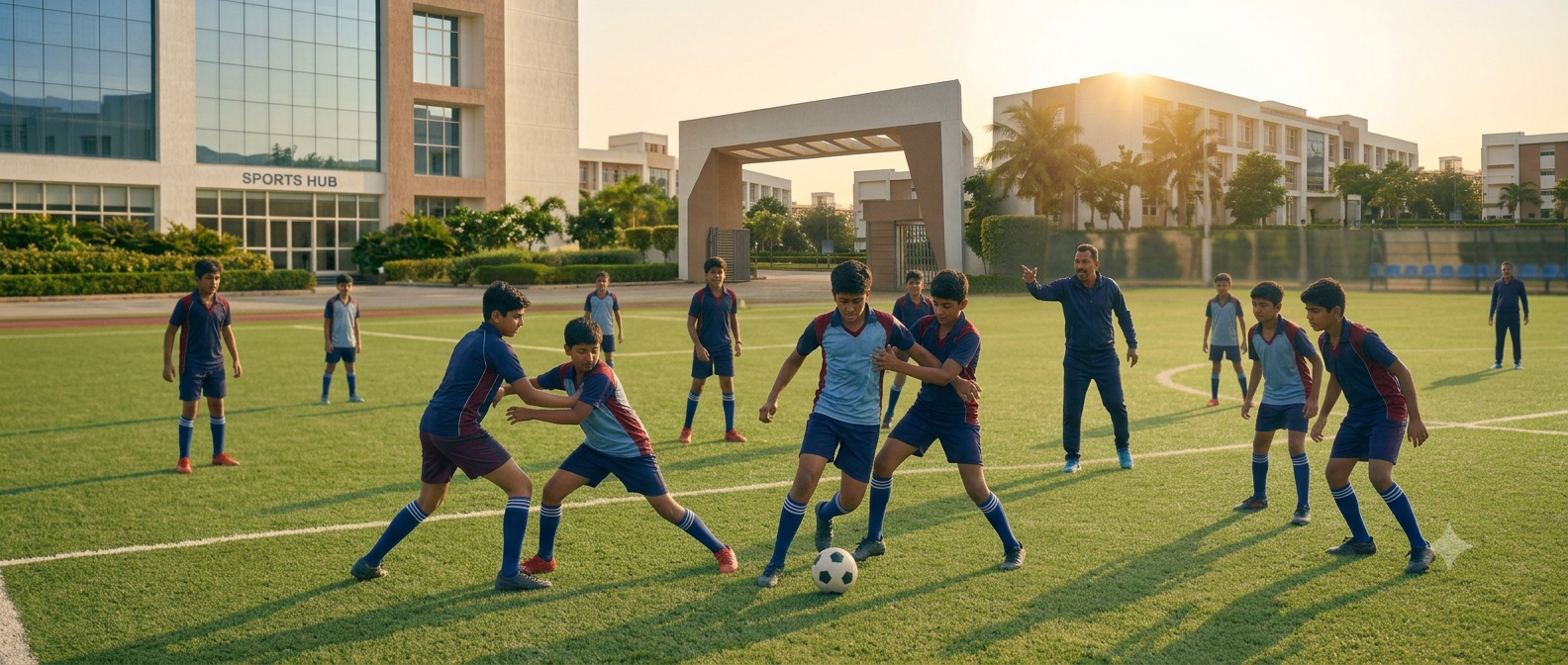
The importance of sports for children in India: A perspective for parents and students
Why does sports participation matter for children?
Regular sports participation builds physical health, mental resilience, and social skills that classroom learning alone doesn't teach. Under NEP 2020, physical education is formally recognised as part of a child's holistic development, not an optional extra squeezed in after academics.
Children who play sport regularly tend to concentrate better, handle stress more calmly, work better in teams, and recover faster from setbacks. These are well-documented benefits — but sport isn't without genuine risks that deserve an honest look, not just enthusiasm.
What are the real risks parents should weigh?
Injury is the most obvious one, and it rises sharply with poor coaching or overuse at a young age. Burnout is the quieter risk — pushing a child into serious training too early, or too hard, can turn something they loved into something they resent. Facility and coaching quality also vary enormously between schools, so "sports" can mean a well-run structured programme in one school and an unsupervised free period in another.
| Area | Upside | Risk |
| Physical | Lower obesity and lifestyle-disease risk | Injury, especially with poor coaching |
| Mental | Better stress management, sharper focus | Burnout from early over-specialization |
| Social | Teamwork, leadership | Uneven coaching quality across schools |
| Career | Coaching, sports science, physiotherapy roles | Professional playing careers are highly competitive |
Should my child pursue sports as a career?
If genuine talent and passion are both present, support it — but plan with open eyes. Outside cricket, professional playing careers in India remain highly competitive with narrow odds of a sustainable income. What's grown far more accessible, and far less discussed, is the world of sports-adjacent careers: coaching, sports science, physiotherapy, and sports management are all expanding fields with realistic entry points.
How much sport is actually enough?
For school-age children, aim for at least 30–45 minutes of physical activity daily, with structured sport two to three times a week being a reasonable target for building real skill and fitness. More isn't automatically better past a point — consistency matters more than volume.
Frequently Asked Questions
Will sports hurt my child's board exam performance?
Generally, no — if managed well. Active children tend to concentrate better in class, not worse, and physical activity is a known stress reliever during exam-heavy years.
My child isn't naturally athletic — should I still push it?
Expose, don't push. The goal at school age is participation and enjoyment, not performance or selection. Interest often develops once the pressure to perform is removed.
How do I know if a school's sports programme is actually good?
Ask about coach qualifications, injury protocols, and how practice time is structured — not just which sports are listed on paper.
...............................................................................................................................................
The takeaway: Sport done right, with realistic expectations and quality coaching, genuinely prepares children for life, not just competition. Done carelessly, it can do the opposite — so coaching and structure matter as much as the decision to play.