How a boarding school experience can be life-changing?
An honest view for parents weighing the decision.
Is a boarding school actually life-changing for children?
For many children a boarding/residential school environment and experience can be positive and help build independence, resilience, confidence and social skills faster than day school typically does. For some, it can be challenging. The outcome depends more on the child's emotional readiness at the time they join, than the school's reputation. Boarding students typically have to manage their own schedules and routines like waking up, studying and socializing, without daily parental intervention, which builds genuine self-confidence and reliance rather than the supervised kind. They also learn to handle homesickness and peer conflict independently, without a parent stepping in to smooth things over. Living in close community around the clock forces real collaboration and empathy, which a few classroom hours a day simply can't replicate.
What are the costs and trade-offs?
Emotional readiness varies enormously from child to child, and it's not predictable from age alone. How well a school actually looks after a homesick or struggling child in pastoral care, differs hugely between institutions, and it's rarely visible on a school tour. Financially, a boarding school is a serious commitment, typically running into lakhs a year depending on the school, its legacy and where it’s located. However, the parent-child relationship itself changes once daily contact stops. For some families this strengthens the bond and relationship between them through more intentional and quality time together, and for some it creates real distance.
What should parents actually check before enrolling?
Skip the brochure and ask operational questions:
- What is the student-to-mentor or student-to-counsellor ratio?
- How does the school handle a child who's struggling emotionally in the first month?
- Is there a real, accessible counselling support, or just a designated office that's rarely used?
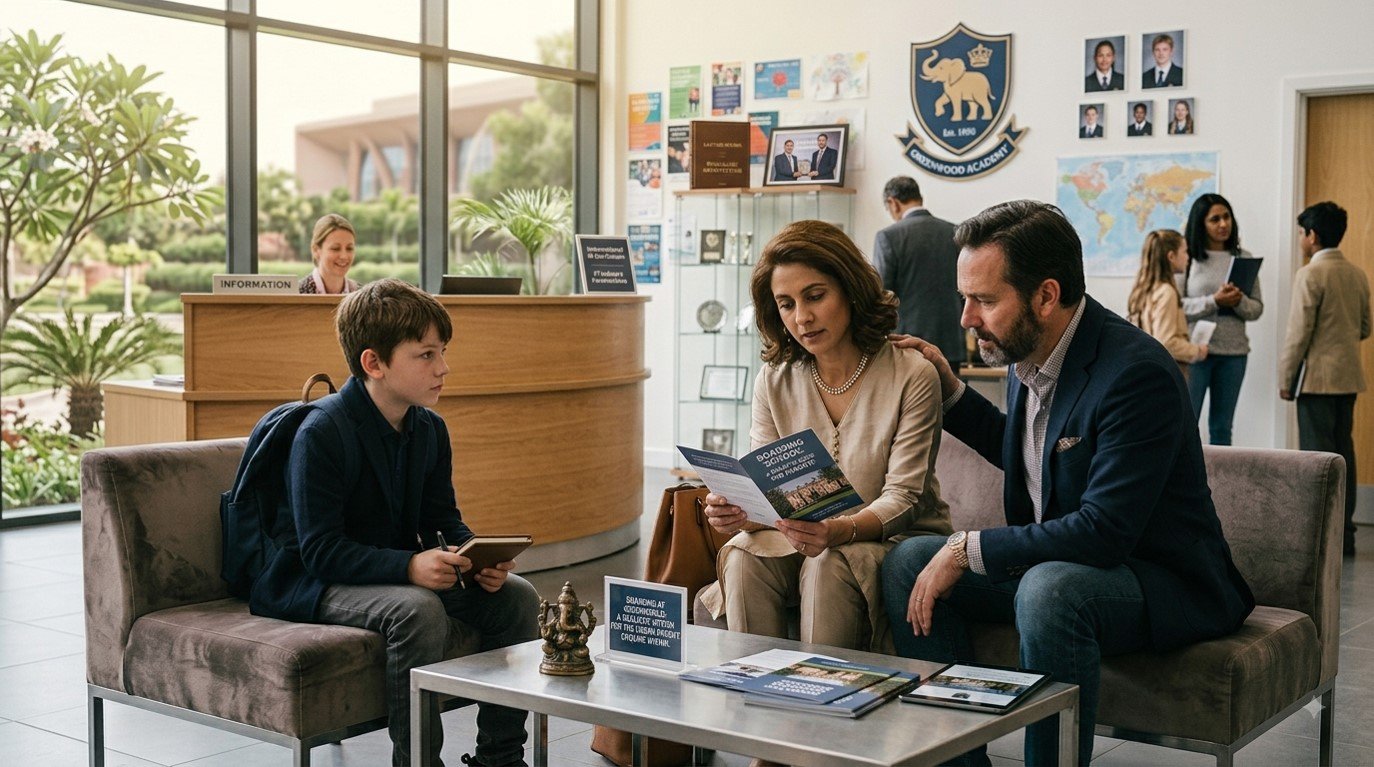
Wherever possible, try to arrange an overnight visit before committing, since a few hours on an official campus tour tells you very little about what daily life and experience in a residential school, actually feels like.
What is the right age to go to a boarding school?
There's no universal "right age." Readiness matters far more than age itself. A confident, and secure child of eleven can adapt better than an anxious sixteen-year-old sometimes. It all depends on the child’s mental strength and adaptability. You need to watch for signs of genuine readiness like does your child cope reasonably well with change, make friends without parental involvement, and handle minor setbacks without prolonged distress? These are better indicators that a child is ready or not, more than any age cutoff.
The Takeaway- Choose boarding school based on your child's temperament and readiness and not on tradition, a friend's recommendation, or the school's name.
...............................................................................................................................................................
Frequently Asked Questions
What is the right age for boarding school?
Readiness matters more than age. A secure, adaptable child settles in faster than an anxious one, regardless of how old they are.
What should we check before enrolling?
Student-to-mentor ratios, counselling access, and ideally, an overnight visit or experiencing a day’s routine in residential school, before you commit, not just a scheduled campus tour.
Does boarding school hurt the parent-child relationship?
Not necessarily. Many families report their relationship and bond strengthens and becomes more intentional, with holidays and calls carrying more genuine connection than daily routine contact did.