
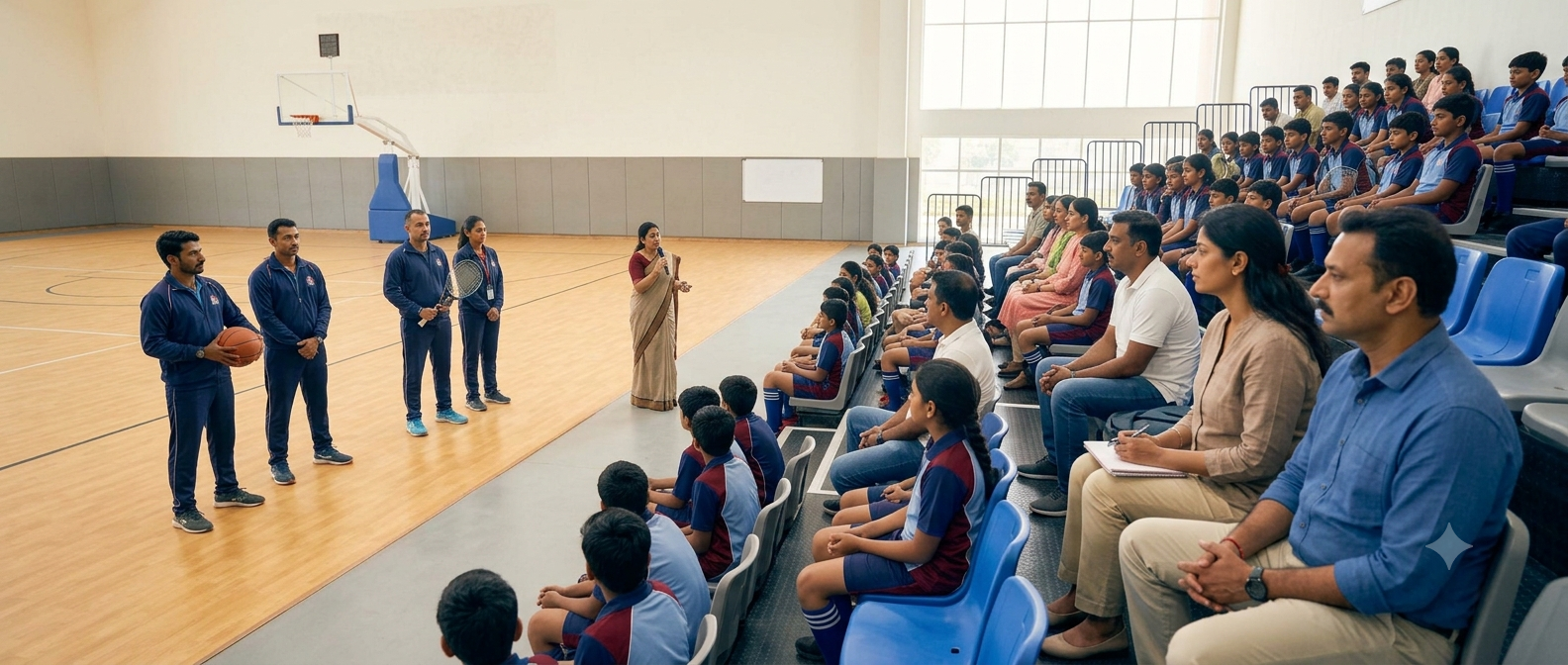
How sports and athletics make students better learners: What every parent should know.
When choosing a school, parents usually compare academics, board results and university placements. Sports often become a secondary consideration. That can be a mistake.
Research and classroom experience increasingly show that sports and academics work together—not against each other. Regular physical activity can improve concentration, memory, discipline and emotional resilience, all of which influence how well children learn.
However, this doesn't mean every child needs to become a competitive athlete. Nor does it mean schools should prioritise sports over academics. The best schools create a healthy balance between both.
How do sports help students become better learners?
Sports do far more than improve physical fitness. They help children develop habits and skills that support learning inside the classroom.
Better time management
Students involved in regular sports quickly learn how to manage their day. Balancing practice, homework and personal time encourages planning and reduces procrastination.
Many teachers observe that students who follow structured sports routines are often better organised in their academic work as well.
Improved concentration and memory
Regular physical activity increases blood flow to the brain and helps improve attention, memory and mental alertness.
Students who stay physically active often find it easier to concentrate during lessons and retain information while studying.
Better decision-making under pressure
Competitive sports constantly require students to make quick decisions, solve problems and adapt to changing situations.
These experiences help children stay calmer during exams, presentations and other high-pressure situations later in life.
Resilience and emotional strength
Winning teaches confidence, but losing teaches resilience.
Sports help children learn how to handle setbacks, accept feedback, recover from disappointment and keep improving—qualities that are just as important in academics as they are on the playing field.
Teamwork and leadership
Whether captaining a team or simply working towards a common goal, sports help students develop communication, responsibility and leadership skills.
These qualities are increasingly valued by universities and employers alongside academic achievement.
Sports and academics: It's about balance
One of the biggest myths is that sports reduce study time.
In reality, well-managed sports programmes usually complement academics rather than compete with them. Schools that integrate sports into the daily timetable often help students develop healthier routines, better discipline and improved focus.
However, balance is essential. Excessive training, poor scheduling or unrealistic expectations can leave students tired and stressed, affecting both academic performance and overall wellbeing.
The benefits of school sports : The Pros
- Improves concentration and memory.
- Builds discipline and time management.
- Develops confidence, resilience and emotional maturity.
- Encourages teamwork, leadership and communication.
- Supports physical and mental wellbeing.
- Helps students manage academic stress more effectively.
- Promotes holistic development, as encouraged by NEP 2020.
The challenges parents should consider : The Cons
- Competitive sports may not suit every child.
- Poorly managed training schedules can interfere with academics.
- Sports injuries are a possibility in contact sports.
- Some schools promote sports heavily but provide limited coaching or student support.
- Pressure to perform in both academics and sports can sometimes increase stress instead of reducing it.
The goal should never be to produce professional athletes. It should be to help children stay active while developing life skills that support their education.
How parents should evaluate a school's sports programme
Instead of asking only whether a school has a football field or swimming pool, ask questions such as:
- Are qualified coaches available?
- Does every child get an opportunity to participate?
- How does the school balance sports during board exam years?
- Are students encouraged to play recreationally as well as competitively?
- Does the school focus on participation, fitness and skill development—not only winning trophies?
A school's philosophy matters far more than the size of its playground.
Are boarding schools better for sports?
Many boarding and residential schools provide stronger sports programmes because students have easier access to coaching, facilities and structured practice every day.
However, this does not automatically make them better for every child.
The right choice depends on your child's interests, personality, academic goals and willingness to participate in sports regularly.
Summary
Parents should stop thinking of sports as time taken away from studies.When introduced in the right way, sports help children become healthier, more disciplined, more confident and better prepared to handle academic pressure. At the same time, sports are not a magic solution. They cannot replace good teaching, consistent study habits or emotional support at home. The best schools understand this balance. They treat sports as an important part of education—not as a distraction from it and not as the only measure of success.
When choosing a school, don't just look at the trophy cabinet. Look at whether the school uses sports to build better learners and more resilient young people.
Frequently Asked Questions
Do sports improve academic performance?
Yes. Regular physical activity can improve concentration, memory, time management and emotional wellbeing, all of which support academic learning.
Should students continue playing sports during board exam years?
Yes, but in moderation. Completely stopping physical activity can increase stress. Most experts recommend reducing competitive commitments while maintaining regular exercise.
Are sports more important than academics?
No. Students need both. Strong academics and regular physical activity complement each other when balanced well.
How can parents identify a good sports programme?
Look beyond facilities. Ask about coaching quality, participation opportunities, competition exposure, student wellbeing and how the school supports student-athletes during examinations.
Does every child need to play competitive sports?
No. Recreational sports, swimming, yoga, athletics or regular physical activity can provide many of the same health and learning benefits. The aim is lifelong fitness and balanced development, not producing elite athletes.